
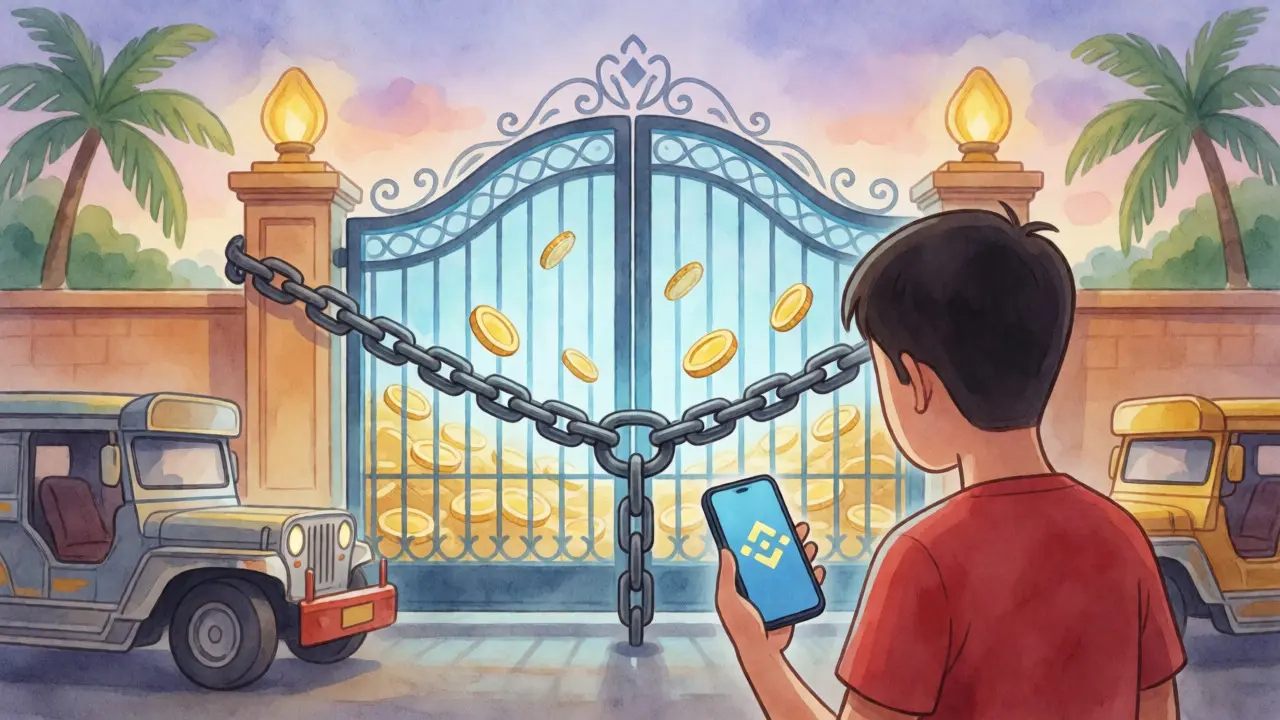
If you're trying to trade crypto from Manila or Cebu right now, you've probably hit a wall. Maybe Binance won't load, or you're wondering if your favorite altcoin exchange is next on the list. The Philippines' regulatory landscape for cryptocurrency has shifted dramatically, moving from loose oversight to aggressive enforcement. This isn't just about one app being blocked; it's a systematic crackdown designed to protect investors but also creating real headaches for traders.
The core issue? International exchanges like Binance are operating without local licenses, and the Securities and Exchange Commission (SEC) has had enough. While Binance faces a hard block, other platforms like Bitget operate in a risky gray area under new rules that came into full effect in mid-2025. Let's break down exactly what's happening, why it matters, and how you can navigate this mess without losing your funds.
The Binance Ban: A Done Deal
Let's start with the biggest name. If you try to access Binance, the world's largest cryptocurrency exchange by trading volume, you'll likely find it blocked. This didn't happen overnight. The Philippine SEC issued warnings back in November 2023, telling Binance they were unauthorized to sell investment products here. By March 2024, the National Telecommunications Commission (NTC) stepped in, physically blocking the website and app for users within the country.
Why so harsh? The regulator argued that unregistered platforms expose Filipinos to risks they don't understand. Without local registration, there's no guarantee your money is safe if the company goes bust. Remember FTX? That collapse scared regulators globally. The Philippines decided not to wait for a local disaster. They gave users 90 days to withdraw assets before cutting off access completely.
But here's the twist: Binance didn't just quietly leave. Reports suggest they kept running promotional campaigns on social media, using influencers to lure new Filipino users even after the ban. The SEC responded fiercely, stating that anyone acting as an agent or promoter for Binance-yes, even online influencers-could face criminal liability. It’s a clear message: stop marketing unlicensed products.
The New Rules: CASP Framework Explained
In May 2025, the game changed entirely. The SEC introduced Memorandum Circulars No. 4 and No. 5, establishing the first comprehensive Crypto Asset Service Provider (CASP) framework. Think of this as the "license to operate" law. These rules took effect on July 5, 2025, and they are strict.
To legally serve Filipino customers, an exchange must:
- Register as a domestic corporation.
- Park at least 100 million pesos (roughly $1.8 million USD) in capital.
- Maintain a physical office within the Philippines.
- Submit detailed monthly financial reports.
- Keep customer funds strictly separate from company assets.
This separation of funds is crucial. It means if the exchange gets sued or goes bankrupt, your Bitcoin isn't used to pay their debts. It’s a basic consumer protection standard that many international exchanges skipped to save costs. Violating these rules isn't cheap either. Penalties range from 50,000 to 10 million pesos per violation, plus daily fines for ongoing non-compliance.
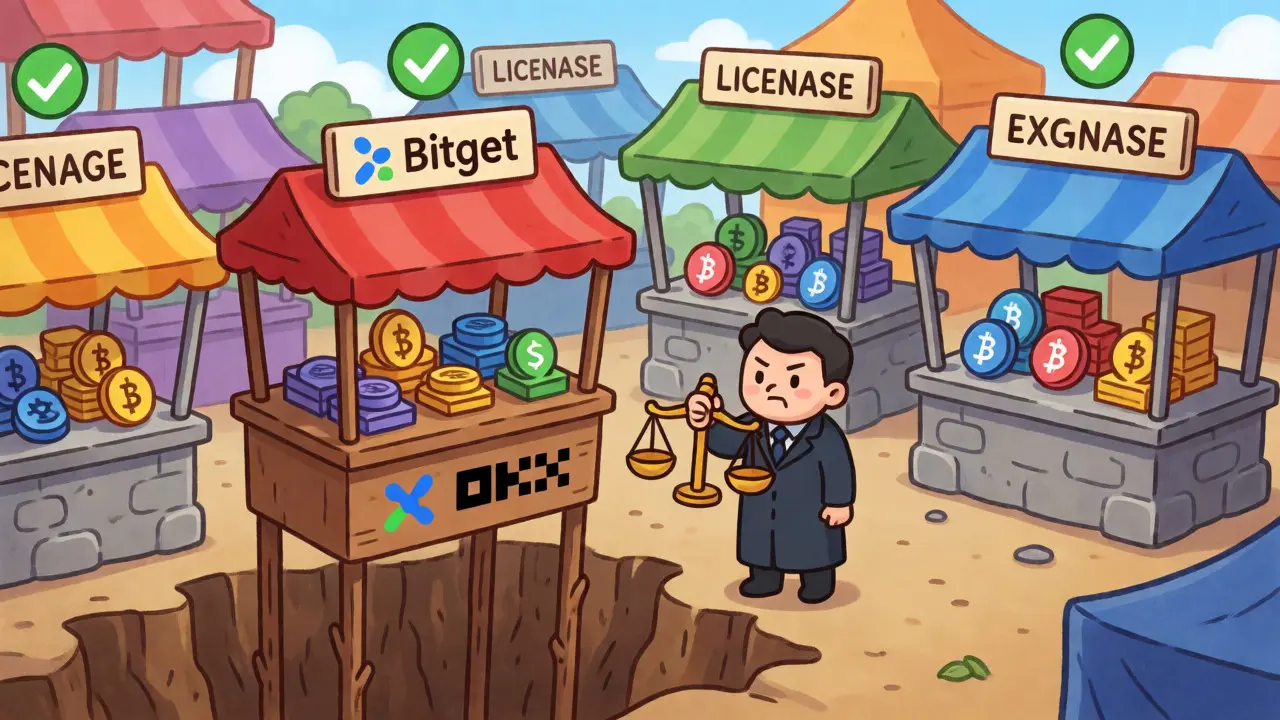
What About Bitget and Other Exchanges?
You might be asking, "Is Bitget banned too?" As of August 2026, Bitget hasn't received the same explicit, publicized block order as Binance. However, that doesn't mean it's safe. The CASP framework applies to all service providers. If Bitget doesn't have a local license and a physical office, it's technically operating illegally.
On August 1, 2025, the SEC issued a broad advisory targeting ten major exchanges, including OKX, Bybit, KuCoin, and Kraken. These platforms continue serving Filipino users despite lacking authorization. Bitget fits squarely into this category. While it wasn't named specifically in every headline, the regulatory logic is universal: if you aren't registered, you're vulnerable.
| Exchange | Status | Reason | User Risk |
|---|---|---|---|
| Binance | Blocked | No license; continued promotion post-warning | High (Access denied, potential account freezes) |
| Bitget | Gray Area | Likely lacks local CASP license | Medium-High (Potential future blocking) |
| OKX/Bybit/KuCoin | Under Warning | Serving users without proper registration | Medium (Advisories issued) |
| Local Licensed Platforms | Active | Compliant with CASP rules | Low (Regulatory protection) |
The risk for Bitget users is sudden disruption. If the SEC decides to enforce the CASP rules against Bitget next, they could follow the Binance playbook: warn, then block. There is no grandfather clause for existing accounts. Compliance is mandatory, not optional.
The VPN Workaround: Is It Safe?
So, how are people still trading? Many use Virtual Private Networks (VPNs). A VPN masks your IP address, making it look like you're logging in from Singapore or Japan, where Binance is allowed. Providers market this heavily, promising "unrestricted access."
But tread carefully. Using a VPN to bypass geo-blocks is a legal gray area. The SEC hasn't explicitly made personal VPN usage a crime, but they have warned that circumventing blocks undermines consumer protection. More importantly, if you get caught promoting these services while using a VPN, you could face issues. And let's be honest: relying on a workaround is stressful. One day your connection works, the next it doesn't. Plus, if your account is flagged for unusual activity due to IP switching, you might face temporary freezes.
Regional Context: Why Now?
The Philippines isn't acting in isolation. Southeast Asia is tightening up. Thailand recently ordered blocks on five exchanges, including Bybit and OKX, citing anti-money laundering concerns. Indonesia hiked taxes on offshore trades by five times. This coordinated effort suggests that the era of "wild west" crypto trading in the region is ending.
For global exchanges, the Philippines is a lucrative market. With a young, tech-savvy population and high remittance volumes, the demand for crypto is real. But regulators are prioritizing stability over convenience. They want to ensure that when you buy Bitcoin, you actually own it, and you can get it out when you need it.
What Should You Do Next?
If you're holding funds on unlicensed exchanges like Bitget or Binance (via VPN), consider these steps:
- Audit Your Holdings: Check which platforms hold significant portions of your portfolio. Don't keep all your eggs in one unregulated basket.
- Explore Local Options: Look for exchanges that have registered with the SEC under the CASP framework. They might have higher fees or fewer coins, but your funds are legally protected.
- Withdraw Profits: If you've made gains on unlicensed platforms, consider moving them to a compliant wallet or exchange. Don't wait for a sudden block to force your hand.
- Stay Informed: Follow official SEC advisories. Rumors spread fast on Twitter/X, but only official memos matter for legal status.
The situation is fluid. Regulators are learning as they go, and exchanges are scrambling to comply. Some may choose to exit the market rather than meet the heavy compliance costs. Others might partner with local entities to get licensed. For now, caution is your best asset.
Is Binance completely banned in the Philippines?
Yes, the National Telecommunications Commission (NTC) blocked access to Binance's website and app in March 2024. The SEC stated that Binance was operating without a license and exposing consumers to unregistered investment products. While users can technically access it via VPN, the official platform is restricted.
Why is Bitget considered risky for Filipino users?
Bitget operates in a regulatory gray area because it likely lacks the required Crypto Asset Service Provider (CASP) license mandated by the SEC's 2025 regulations. While not explicitly blocked like Binance, it faces the same legal requirements. If it fails to register locally, it could face similar enforcement actions, including potential blocking or penalties.
Can I still use Binance with a VPN in the Philippines?
Technically, yes, many users do. However, this is a workaround, not a legal solution. The SEC has warned that circumventing blocks undermines consumer protections. Additionally, using a VPN can trigger security flags on the exchange, potentially leading to account reviews or temporary freezes.
What are the penalties for exchanges violating the new CASP rules?
Exchanges found operating without proper registration face fines ranging from 50,000 to 10 million pesos per violation. Additionally, they may incur daily penalties of 10,000 pesos for each day the violation continues. Severe cases could lead to permanent bans from the Philippine market.
Are there any licensed crypto exchanges in the Philippines?
Yes, several local platforms have registered with the SEC under the CASP framework. These include entities like PDAX and Coins.ph (now part of GCash ecosystem partners), though the list evolves as more companies apply for licenses. Always verify current registration status directly with the SEC before depositing large sums.