
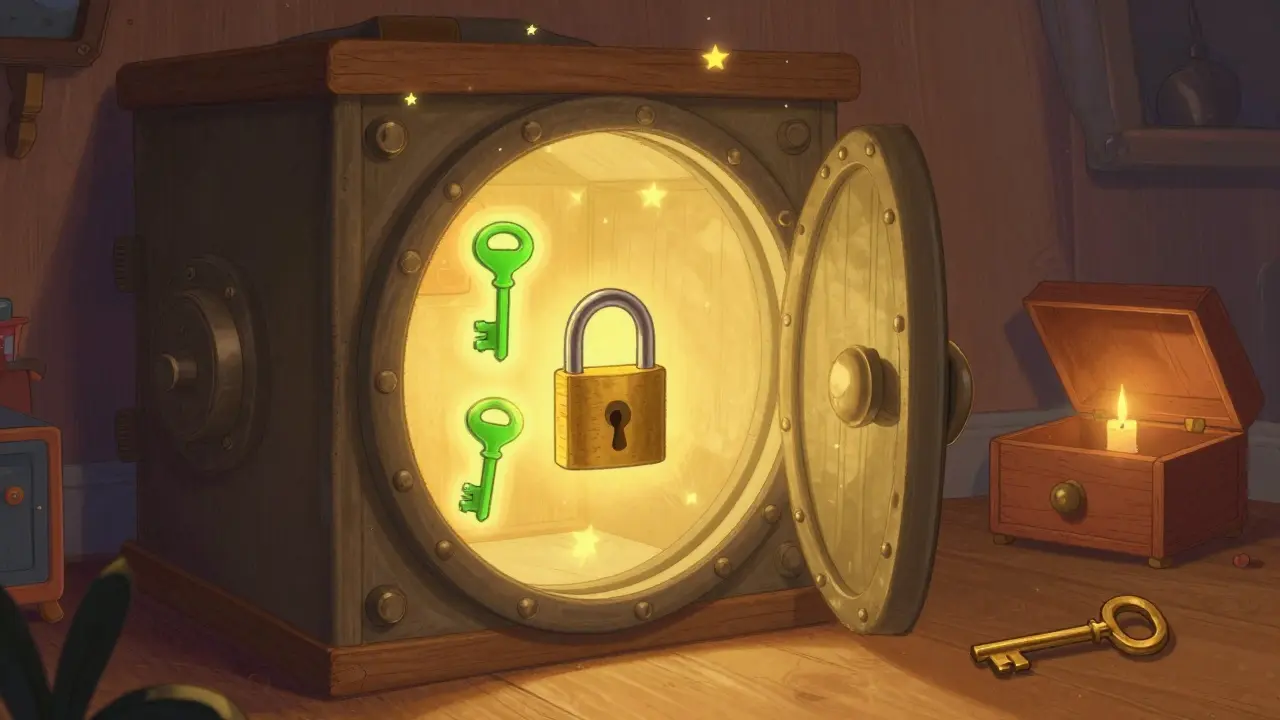
Imagine losing your crypto because one password got stolen. That’s what happens with a regular wallet - one key, one point of failure. But what if you needed two out of three people to sign off before any money could move? That’s the power of a multisig wallet. It’s not science fiction. It’s how institutions, crypto funds, and serious investors protect millions in digital assets today.
How MultiSig Wallets Work - Simple as a Bank Account
A multisig wallet doesn’t rely on one private key. It uses multiple keys, and you set rules: how many signatures you need to spend. Common setups are 2-of-3, 3-of-5, or even 4-of-7. Think of it like a corporate bank account that needs two managers to approve a wire transfer. Only here, the approvals are digital signatures, not wet ink.Here’s how it plays out: You start a transaction. The wallet waits. It doesn’t broadcast to the blockchain until the required number of signers - say, two - have approved it using their separate devices. Even if one device is hacked, one key is lost, or someone gets phished, the funds stay safe. As long as the minimum number of keys remains secure, your money is protected.
It’s not magic. It’s math. And it’s proven. The Gnosis Safe smart contract, used by over $100 billion in assets, has never been successfully exploited. That’s because every signature is cryptographically verified. No central server to break. No single point to attack.
Why You’d Choose MultiSig Over a Regular Wallet
Regular wallets are fine for small amounts - like keeping $500 in ETH for swapping on Uniswap. But if you’re holding $50,000 or more, or managing funds for a team, the risks skyrocket. A single compromised phone, a lost seed phrase, or a rogue employee can wipe you out.Multisig fixes that. Here’s what it gives you:
- Shared control - No one person has full power. Perfect for teams, DAOs, or family accounts.
- Recovery resilience - Lose one key? No problem. As long as you still have the others, you’re fine.
- Reduced insider threat - Even if someone on your team turns bad, they can’t steal alone.
- Corporate-grade security - Used by Coinbase, BitGo, and Ethereum co-founder Vitalik Buterin.
The trade-offs? Higher fees and slower transactions. Each signature adds data to the blockchain. More signatures = bigger transaction size = higher gas fees. And you can’t move money instantly - you need to wait for others to approve. But for large holdings, that delay is a feature, not a bug. It gives you time to spot mistakes or fraud before it’s too late.
Top MultiSig Wallet Platforms in 2026
Not all multisig wallets are built the same. Some focus on Bitcoin. Others on Ethereum. Some are easy to use. Others are built for enterprise teams. Here are the top platforms right now.Safe Wallet (formerly Gnosis Safe)
Safe Wallet is the most widely adopted multisig solution on Ethereum and EVM chains. It’s a smart contract wallet - meaning it runs on-chain, not just as an app. That’s important. Even if the Safe Wallet website goes down, you can still access your funds using Etherscan or other tools. No vendor lock-in.
It supports 2-of-3, 3-of-5, or custom setups. You can link it to MetaMask, Ledger, Trezor, or even mobile wallets like Argent. Signers can be anywhere - your phone, your hardware wallet, your colleague’s laptop. The smart contract is open-source, audited by multiple firms, and immutable. Once deployed, no one can change the rules.
Used by major DeFi protocols like Aave, Compound, and Yearn. Also trusted by individuals managing large ETH holdings. If you’re on Ethereum, this is your go-to.
Blue Wallet Vault (Bitcoin Focus)
If you’re holding Bitcoin and want multisig, Blue Wallet’s Vault feature is the most user-friendly option. It lets you create 2-of-3 or 3-of-5 multisig wallets. Each signer gets their own seed phrase stored on a separate device - phone, hardware wallet, or paper backup.
It integrates with Ledger and Trezor, so you can keep keys offline. The interface is clean, and it guides you through setup without needing to understand Bitcoin scripting. It’s perfect for families or small teams managing BTC savings. No smart contract. Just pure Bitcoin multisig using P2SH or Taproot.
One downside? It’s Bitcoin-only. If you’re holding other chains, you’ll need another solution.
Other Notable Options
- Coinbase Vault - A custodial multisig option. Coinbase holds the keys, but requires multiple approvals for withdrawals. Less secure than self-custody, but easier for beginners.
- Casa - Offers 2-of-3 multisig with a focus on user experience. Uses hardware keys and mobile apps. Good for high-net-worth individuals.
- BitGo - Institutional-grade. Used by exchanges and hedge funds. Offers 2-of-3 with cold storage and insurance. Not for casual users.
- Electrum - The classic Bitcoin desktop wallet. Supports multisig since 2014. More technical. Best for users comfortable with Bitcoin CLI and raw transaction signing.

Multisig vs. MPC: Two Paths to Better Security
You might hear about MPC (Multi-Party Computation) as an alternative to multisig. They’re both designed to eliminate single points of failure, but they work differently.
Multisig uses separate private keys. Each key is a full, independent signature. You need a physical device to sign. It’s transparent, auditable, and works on any blockchain.
MPC splits one private key into shares. No single device ever holds the full key. Signatures are generated collaboratively without reassembling the key. This makes it harder to steal, but it’s more complex to audit. Also, MPC is mostly used on Ethereum and newer chains - Bitcoin support is limited.
For most users, multisig is the better choice. It’s proven, transparent, and doesn’t rely on proprietary tech. MPC is powerful for enterprises with deep security teams. But for individuals and small teams? Stick with multisig.
Real-World Use Cases
Who actually uses multisig wallets? Here’s what it looks like in practice:
- DAO Treasury Management - A decentralized organization needs 3 of 5 board members to approve spending. Safe Wallet handles it. No single person can drain the treasury.
- Family Crypto Inheritance - A parent sets up a 2-of-3 wallet: one key with them, one with their spouse, one with their lawyer. If something happens, the family can recover funds without court battles.
- Business Crypto Payments - A company holds BTC for payroll. Two finance officers and the CEO each hold a key. No one can pay themselves without approval.
- High-Value Investors - Someone holds 100+ BTC. They split keys across a Ledger, a Trezor, and a paper backup stored in a safety deposit box. Even if one fails, the funds are safe.
These aren’t hypotheticals. These are real setups used daily. The difference between a single-key wallet and a multisig one is the difference between a padlock and a bank vault.

Pitfalls to Avoid
Multisig isn’t foolproof. Poor setup can still lead to loss.
- Don’t store all keys in one place - If you keep all three keys on your laptop, you’ve defeated the purpose. Spread them across devices and locations.
- Test recovery before you deposit big amounts - Do a dry run. Try signing a fake transaction with two keys. Make sure you know the process.
- Don’t use the same seed phrase across wallets - Each key should come from a unique, air-gapped seed phrase.
- Don’t trust the app interface alone - Always verify transaction details on-chain. Use Etherscan or Bitcoin Explorer to double-check before signing.
There have been cases where users lost funds because they set up a 3-of-5 wallet but lost two keys. Or they used a buggy wallet that didn’t properly verify signatures. Always audit your setup. Use open-source tools. Don’t rush.
What’s Next for MultiSig Wallets?
The future is brighter. New features are rolling out:
- Time-locked transactions - You can set a delay before funds can be moved. Say, 72 hours. Gives you time to cancel a suspicious transfer.
- Biometric + hardware key combos - Sign with your fingerprint and a Ledger device. Two-factor, but crypto-native.
- Cross-chain multisig - Soon, you’ll be able to manage ETH, BTC, and SOL from one wallet with multisig rules.
- Simpler interfaces - Apps like Safe Wallet are adding guided setup wizards. No more needing to understand “threshold signatures.”
The trend is clear: multisig is becoming the standard for serious crypto holders. Not because it’s trendy - because it works.
Final Advice: When to Use It
Ask yourself:
- Are you holding more than $10,000 in crypto?
- Are you managing funds for more than one person?
- Would you panic if one device got stolen or lost?
If you answered yes to any of these - you need a multisig wallet.
For small, personal use? Stick with a single-key wallet. It’s simpler. But if your crypto matters - your savings, your business, your family’s future - don’t gamble with one key. Use multisig. It’s the difference between sleeping well and losing everything.
What is a multisig wallet?
A multisig wallet requires multiple private key signatures to authorize a transaction. For example, a 2-of-3 wallet needs any two out of three keys to approve a transfer. This spreads control across multiple people or devices, making theft or accidental loss much harder.
Are multisig wallets safer than regular wallets?
Yes, for large holdings. Regular wallets rely on one private key - if it’s lost or stolen, you lose everything. Multisig wallets require multiple keys to spend, so even if one key is compromised, your funds are still protected as long as the required number of keys remain secure.
Can I use a multisig wallet for Bitcoin and Ethereum?
Yes. Blue Wallet and Electrum support Bitcoin multisig. Safe Wallet (Gnosis Safe) is the leading choice for Ethereum and EVM-compatible chains. Some newer wallets are starting to support cross-chain multisig, but most are still chain-specific.
What happens if I lose one of my keys?
If you lose one key but still have the required number of others, you can still access your funds. For example, in a 2-of-3 setup, losing one key doesn’t lock you out - you just need to use the other two. That’s why it’s critical to distribute keys across separate, secure locations.
Do multisig wallets cost more to use?
Yes. Each signature adds data to the blockchain transaction, making it larger. Larger transactions cost more in gas fees on Ethereum or miner fees on Bitcoin. A 2-of-3 transaction typically costs 50-100% more than a single-signature one. But for large amounts, the cost is worth the security.
Is Safe Wallet really secure?
Yes. Safe Wallet uses open-source, audited smart contracts deployed on-chain. Even if the website goes down, you can still access your funds through Etherscan or other tools. It’s self-custodial, meaning you own the keys. Over $100 billion in assets are secured by Safe Wallet, and it has never been hacked.
Can I change the signers in my multisig wallet?
It depends on the wallet. Safe Wallet allows you to update the list of signers after setup. Others, like Blue Wallet Vault, require you to create a new wallet if you want to change signers. Always plan your signer list carefully before depositing funds.
Do I need hardware wallets for multisig?
Not required, but highly recommended. Hardware wallets like Ledger and Trezor store keys offline, making them immune to online hacks. Using them as signers adds a major layer of security. You can combine them with phone-based signers for a balanced setup.
Comments
Bill Sloan
This is exactly why I switched to Safe Wallet last year. I had 50 ETH sitting there and one day my phone got stolen. 😅 Thank god I had my Ledger and my wife’s phone as the other two keys. No panic. Just fired off a tx from the other two and moved everything. Multisig = peace of mind. 🙌
January 14, 2026 AT 17:39
ASHISH SINGH
lol so you’re telling me the same people who told us ‘not your keys not your crypto’ now want us to trust a 2-of-3 setup run by some open-source contract that could be backdoored by the NSA? 🤔 I mean, if they can break quantum encryption, they can fake signatures. This is just crypto theater. Keep your coins on Binance. At least they’ll refund you... maybe.
January 16, 2026 AT 04:28
Vinod Dalavai
I set up a 2-of-3 with my brother and dad for our family BTC stash. Used Blue Wallet. Super easy. We each have a Ledger. One key on paper in a fireproof box. No drama. We tested it with 0.01 BTC first. Best decision we made. 🤝 You don’t need to be a hacker to do this. Just be smart.
January 17, 2026 AT 05:38
Chidimma Okafor
I appreciate the thorough breakdown. As someone managing a DAO treasury, multisig isn’t optional-it’s foundational. We use Safe Wallet with 4-of-7, and the audit trail on Etherscan has saved us twice from fraudulent proposals. The gas cost is real, but the governance integrity? Priceless. Thank you for highlighting this.
January 18, 2026 AT 03:36
Jill McCollum
i just set up my first multisig and somehow i forgot which device had which key 😅 turned out i had 2 on my phone and one on my laptop… so technically not multisig at all. lol. lesson learned: write it down. like, on paper. not in a notes app.
January 19, 2026 AT 17:10
Hailey Bug
Multisig is the only way to go if you’re holding more than a few grand. I’ve used Safe Wallet for 3 years. Never had an issue. The key is using hardware wallets for at least two of the keys. Don’t trust phone-only signers. Ever. I’ve seen too many people get phished.
January 21, 2026 AT 14:43
Stephen Gaskell
America doesn’t need this. Just use Coinbase. It’s safe. If you’re worried about security, you’re probably not rich enough to lose anyway.
January 22, 2026 AT 20:58
CHISOM UCHE
The cryptographic primitives underpinning threshold signatures in multisig architectures are non-trivial to implement correctly. The attack surface expands exponentially with signer distribution vectors, especially when non-custodial interfaces lack formal verification. I’ve audited three of these contracts-two had nonce reuse vulnerabilities in their legacy ABI.
January 23, 2026 AT 13:54
Patricia Chakeres
Of course the article says Safe Wallet has never been hacked. That’s because the only people using it are the same ones who believe the moon landing was real. Meanwhile, the real power players use MPC with zero-knowledge proofs and private key sharding. This multisig stuff is for people who still use Outlook.
January 24, 2026 AT 05:36
Alexis Dummar
I used to think multisig was overkill… until my cousin lost his entire portfolio because he backed up his seed phrase on a USB stick… and then his cat knocked over his coffee. 🐱☕️ Now I use 2-of-3 with one key on my phone, one on a Ledger, and one on a paper copy buried in my garden. The cat doesn’t know where it is. Neither does my ex.
January 24, 2026 AT 16:17
kristina tina
I cried when I finally set up my multisig. Not because it was hard. Because I realized I’d been sleeping with a loaded gun under my pillow for years. This isn’t just security-it’s emotional safety. I can finally breathe. Thank you for writing this. I’m telling my whole family.
January 25, 2026 AT 00:58
Anna Gringhuis
Wow. So you’re recommending people spend $100 extra in gas fees… just so they can wait 24 hours to move their crypto? How quaint. Meanwhile, I just moved $200k in 3 seconds with my hot wallet. If you’re worried about getting hacked, maybe don’t tweet about your wallet address.
January 25, 2026 AT 06:58
Michael Jones
One critical point missing: always rotate your signers if someone leaves your team or relationship ends. Safe Wallet allows this. Blue Wallet doesn’t. If you’re setting this up for a business or family, plan for change. Don’t wait until it’s too late.
January 26, 2026 AT 12:23
Andre Suico
Your post is accurate and well-structured. However, I’d like to clarify a subtle but important distinction: while MPC offers superior key secrecy, multisig provides superior transparency and auditability. For non-technical users, the ability to verify every signature on-chain via Etherscan is a powerful psychological and technical advantage. I recommend multisig for individuals and small teams, MPC for institutions with dedicated security teams.
January 28, 2026 AT 03:09