
African Crypto Access Checker
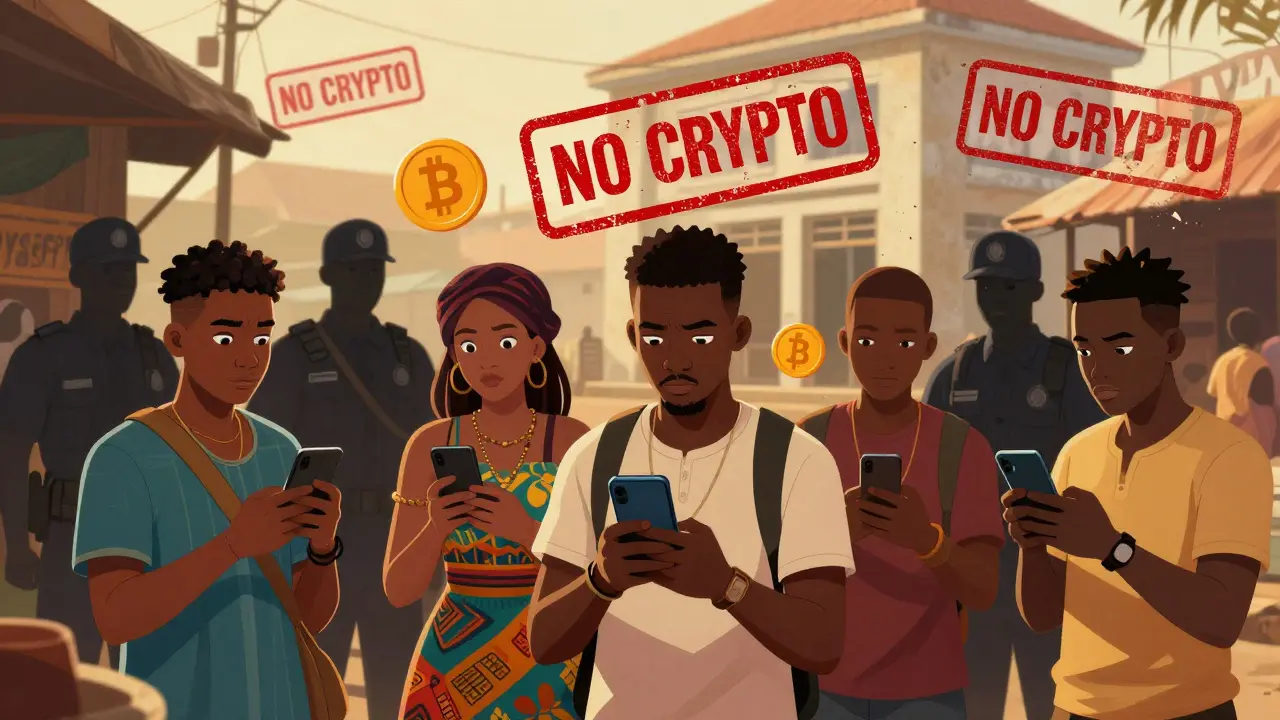
Across Africa, the fight for financial freedom is no longer just about opening bank accounts-it’s about bypassing them. While traditional banking remains out of reach for millions, cryptocurrency has become a lifeline. But in several African nations, the very tools meant to unlock financial inclusion are being blocked at the door-by banks, regulators, and outdated laws. This isn’t about banning crypto outright. It’s about cutting off its connection to the real economy. And the result? A growing divide between what people can do and what the system allows.
Where Crypto Is Legal, But Banks Won’t Touch It
Nigeria is the clearest example. Over 30 million Nigerians own cryptocurrency. They trade Bitcoin, send remittances via USDT, and use crypto to buy goods when the naira drops. But if you try to link that crypto activity to your bank account? You’re breaking the rules. The Central Bank of Nigeria (CBN) banned banks from handling crypto transactions back in 2021. Not just exchanges-individuals too. If your bank finds out you’re trading crypto, they’ll freeze your account. No warning. No appeal. Just silence. The CBN says it’s about money laundering and unregulated platforms. But here’s the catch: Nigerians aren’t using shady offshore exchanges. They’re using platforms like Binance, Paxful, and Yellow Card-services that are now licensed in over 40 countries. The real issue? Banks don’t want to lose control. Crypto removes their monopoly on moving money. And that’s a threat they’re willing to crush-even if it hurts ordinary people. Cameroon faces the same problem, but with a twist. The country doesn’t have its own crypto law. Instead, it follows a regional rule from COBAC, the Central African Banking Commission. That rule says: no bank can touch any crypto-related transaction. Not deposits. Not withdrawals. Not even paying a supplier in Bitcoin. So while owning crypto isn’t illegal, using it for anything practical? Impossible. People are forced to rely on cash, informal networks, or risky peer-to-peer deals. For small businesses importing goods from China or selling to Europe, this adds weeks of delay and 20-30% extra cost.South Africa: The Exception That Proves the Rule
Then there’s South Africa. It’s the only African country with a clear, working crypto regulatory system. The Financial Sector Conduct Authority (FSCA) treats crypto as a financial product. That means exchanges must register, verify users, and report suspicious activity. They must follow the Travel Rule: for any transaction over ZAR 25,000 (about $1,500), they collect names, ID numbers, and bank details of both sender and receiver. It sounds strict. And it is. But it works. South African crypto businesses can open bank accounts. They can pay employees. They can get insurance. They can scale. Firms like Luno and Rain operate openly. Investors trust them. And because the rules are clear, international players are setting up shop there. South Africa isn’t banning crypto-it’s bringing it into the light. This isn’t just about compliance. It’s about trust. When people know the system won’t suddenly shut them down, they invest more. They build more. They use crypto not just to survive, but to grow.The Gray Zones: Where No One Knows What’s Allowed
In Tanzania, crypto isn’t banned-but it’s not welcomed either. The Bank of Tanzania says the shilling is the only legal tender. They advise people not to use crypto. No fines. No arrests. Just cold shoulder. That uncertainty kills adoption. Why build a business around something the central bank doesn’t want you to touch? Startups avoid it. Investors walk away. Even individuals hesitate. The same goes for countries like Egypt and Algeria. No official ban. No official support. Just silence. And in silence, rumors grow. People hear stories of accounts being frozen. Of friends getting called in for questioning. So they stop. Even if they could use crypto, they don’t.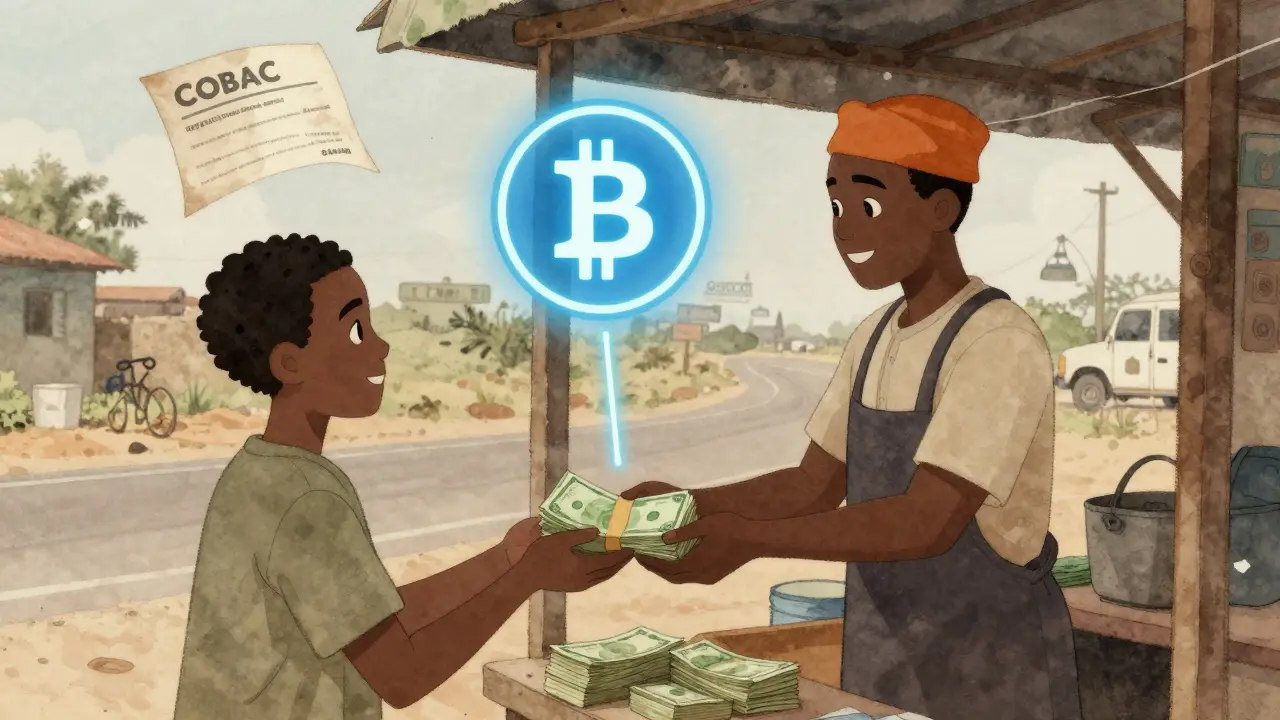
Why Do Governments Fear Crypto So Much?
The fear isn’t about technology. It’s about control. In many African nations, banks are tied to the state. They’re tools for managing the economy, tracking spending, and enforcing sanctions. Crypto breaks that chain. It lets people send money without permission. It lets them store value outside the national currency. It lets them trade with anyone, anywhere, without a middleman. Governments don’t like losing control. Especially when their own currencies are unstable. Nigeria’s naira lost over 50% of its value against the dollar between 2023 and 2025. People turned to Bitcoin and USDT not because they loved crypto-but because they had no other choice. The CBN didn’t ban crypto to protect the economy. It banned it to protect its own power. And here’s the irony: the same governments that block crypto are the ones that benefit most from remittances. Nigerians abroad send over $20 billion home every year. Most of it goes through informal channels-hawala networks, cash couriers, WhatsApp deals. Crypto could make that faster, cheaper, and safer. But instead of embracing it, they punish the users.What’s Changing in 2025?
Change is coming. Slowly. But it’s coming. Kenya, Zambia, and Rwanda all released draft crypto laws in mid-2025. Not bans. Not warnings. Actual laws. Rules for licensing, taxes, reporting. Kenya even invited crypto companies like Yellow Card to help write them. That’s huge. It means regulators are finally listening to the people who use this tech every day. Morocco, which banned crypto in 2017, now says it will have a full regulatory framework by the end of 2025. Ghana is testing a central bank digital currency (CBDC) that could one day integrate with crypto wallets. Even Angola is exploring crypto taxation models. The reversal of Bitcoin’s legal tender status in the Central African Republic in April 2023 was a wake-up call. It showed that going all-in on crypto without infrastructure or public trust leads to collapse. Now, countries are learning: regulation isn’t the enemy. Chaos is.
Comments
Kurt Chambers
lol so africa needs crypto because their governments are trash? news flash: every country has corrupt banks. but we dont go full anarchist because some dude in Lagos got his account frozen. fix your currency, not your bank accounts.
December 13, 2025 AT 23:34
Kelly Burn
This is literally Web3 meets real-world trauma 💔 The way people are hacking finance with P2P and Telegram groups? That’s not innovation-it’s survival mode on steroids 🚀 And honestly? We should be studying this, not judging it. Crypto isn’t the problem. It’s the only tool left when the system is rigged.
December 14, 2025 AT 19:50
John Sebastian
I don't trust crypto. Too many scams. Too much volatility. If people can't use banks properly, maybe they need financial literacy, not digital currencies.
December 16, 2025 AT 13:13
Jessica Eacker
You don’t have to agree with crypto to see how cruel it is to punish people for trying to feed their kids. The banks aren’t protecting the economy-they’re protecting their power. And that’s not justice. That’s just greed. Keep going, people. You’re doing better than the system ever did.
December 18, 2025 AT 02:38
Albert Chau
So you’re saying the solution to economic collapse is to let random strangers on the internet trade digital tokens? That’s not freedom. That’s anarchy with a blockchain logo. If you can’t manage your own currency, don’t blame tech for your failure.
December 18, 2025 AT 14:45
Madison Surface
I just cried reading about the single mom in Lagos. Imagine being told your money is worthless, and the only way to save your child is to trade crypto with a stranger in a parking lot. This isn’t about tech. This is about dignity. And we’re all watching. And we’re all ashamed.
December 18, 2025 AT 21:58
Tiffany M
Okay, but let’s be real-nobody in Africa is using crypto because they’re ‘tech-savvy.’ They’re using it because the naira is garbage, the banks are crooked, and the government doesn’t care. And guess what? That’s not a bug. It’s a feature. The system is broken. Crypto is the duct tape holding it together. Let them have their duct tape.
December 19, 2025 AT 01:07
Eunice Chook
Nigeria ranked 3rd in adoption? That’s not a win. That’s a warning sign. When a country’s citizens rely on crypto to survive, it means the state has failed. And now you’re celebrating it? That’s like praising a drowning man for using a plastic bottle as a life raft.
December 19, 2025 AT 09:10
Lois Glavin
Honestly? I think people are doing the best they can with what they’ve got. No one’s asking for permission. They’re just trying to eat. And honestly? That’s more human than most banks ever were.
December 19, 2025 AT 21:44
Abhishek Bansal
Wait, so you’re saying the problem is banks? What about corruption? What about the fact that 70% of Africans don’t even have ID? Crypto won’t fix that. It’ll just make it easier to launder money. You’re romanticizing desperation.
December 21, 2025 AT 02:33
Scot Sorenson
So the solution to hyperinflation is… more digital money? Wow. That’s like trying to fix a leaking roof by adding more rain. The CBN isn’t the villain here. The villain is a government that printed money like it was confetti and now blames crypto for the mess.
December 22, 2025 AT 09:03
Patricia Whitaker
This article is just crypto bro propaganda. If it’s so great, why are people using P2P with strangers in parking lots? Why not just use PayPal? Oh right-because Africa doesn’t have real infrastructure. Stop pretending this is freedom. It’s just chaos with a whitepaper.
December 22, 2025 AT 09:09
Joey Cacace
I am deeply moved by the resilience of African communities navigating systemic barriers with ingenuity and courage. The adoption of decentralized financial tools represents not mere technological adoption, but a profound reclamation of autonomy under duress. One must acknowledge the moral imperative to support such grassroots innovation.
December 23, 2025 AT 14:36
Kathleen Sudborough
I know it sounds wild, but I’ve talked to people in Kenya who use crypto to pay for school fees. They don’t care about blockchain. They care about their kids having books. And honestly? That’s the most beautiful thing I’ve heard all year. We’re so obsessed with the tech, we forget the people behind it.
December 24, 2025 AT 12:09
Vidhi Kotak
In India, we’ve seen this too. People use USDT to send money home from the Gulf. Banks charge 10% and take 3 days. Crypto takes 10 minutes and costs 1%. It’s not about rebellion-it’s about common sense. Why fight progress when it’s helping people?
December 24, 2025 AT 17:08
Kim Throne
The regulatory frameworks in South Africa provide a model for balanced innovation. By integrating compliance with accessibility, the FSCA has demonstrated that regulation need not stifle adoption but can instead foster legitimacy and institutional trust. This approach should be emulated globally.
December 25, 2025 AT 06:24
Caroline Fletcher
The real story? The IMF is pushing this. They want to replace African currencies with crypto so they can control it all from behind the scenes. Banks aren’t the enemy. The global elite are. You think this is about freedom? It’s about control. They just made it look like a revolution.
December 26, 2025 AT 03:26
Heath OBrien
I’m from the UK and I’ve seen this happen here too. Banks freeze accounts for crypto. People get treated like criminals. But guess what? We don’t cry about it. We just move on. Why should Africans be any different? Stop acting like they’re victims. They’re survivors.
December 26, 2025 AT 14:49