
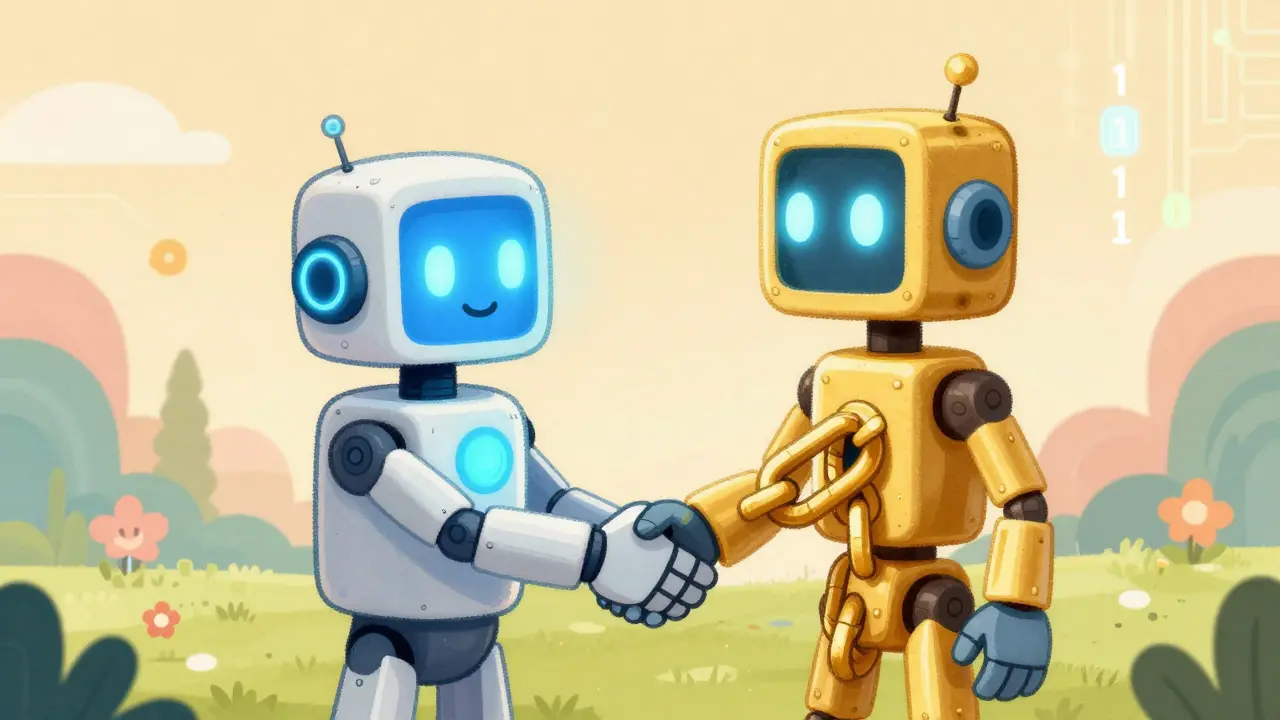
Imagine a world where your digital identity is unbreakable, your medical records are private yet instantly accessible to any doctor you choose, and the food on your plate has a verifiable journey from farm to fork. This isn’t science fiction; it’s the emerging reality of Artificial Intelligence and Blockchain Integration, the convergence of machine learning capabilities with decentralized ledger technology to create secure, transparent, and automated digital ecosystems.. We often hear about AI and blockchain as separate giants in the tech world. But when they work together, they solve each other’s biggest weaknesses. AI needs trustworthy data to learn correctly, and blockchain needs intelligence to process information efficiently. Together, they form a powerful engine for the next generation of digital infrastructure.
Why Combine AI and Blockchain?
To understand why this integration matters, we first need to look at what each technology struggles with on its own. Artificial Intelligence, particularly machine learning, is only as good as the data it feeds on. If the data is biased, corrupted, or fake, the AI’s decisions will be flawed-a problem known as "garbage in, garbage out." Traditional centralized servers can be hacked, altered, or manipulated by single entities, compromising that data integrity.
On the flip side, blockchain is incredibly secure and immutable, meaning once data is written, it cannot be changed. However, blockchain networks can be slow, energy-intensive, and lack the ability to make complex decisions or analyze patterns on their own. They store data well but don't "think" about it.
This is where the synergy happens. Blockchain provides an immutable, decentralized ledger that ensures data authenticity and provides transparent audit trails. It acts as a tamper-proof vault for the data AI uses. In return, Artificial Intelligence enhances blockchain operations through automated decision-making, pattern recognition, and efficient processing of distributed data. AI can optimize how blocks are created, reduce energy consumption in mining, and manage complex transactions automatically. The result is a system that is both intelligent and trustworthy.
The Core Mechanism: Smart Contracts and AI
The bridge between these two technologies is primarily built using Smart Contracts are self-executing contracts with the terms of the agreement directly written into code, stored on the blockchain.. Traditionally, smart contracts are rigid-they execute only if specific, pre-defined conditions are met. For example, "If package arrives, release payment."
When you inject AI into this mix, smart contracts become dynamic and intelligent. An AI-enhanced smart contract can analyze external data sources, interpret natural language, or even adjust its parameters based on historical performance. Imagine an insurance policy that doesn't just check if a flight was delayed (a simple condition) but uses AI to verify the cause of the delay via weather APIs and news feeds, ensuring fair payouts without human intervention. The AI drafts or modifies the contract logic based on real-time insights, while the blockchain records every step immutably, ensuring no one can cheat the system afterward.
| Feature | Standalone AI | Standalone Blockchain | Integrated AI-Blockchain |
|---|---|---|---|
| Data Integrity | Vulnerable to manipulation | High (Immutable) | Verified & Secure |
| Decision Making | Highly Advanced | Limited (Rule-based) | Intelligent & Transparent |
| Transparency | Low (Black Box) | High (Public Ledger) | Explainable AI |
| Efficiency | Fast Processing | Slow Consensus | Optimized via AI |

Real-World Applications Across Industries
The theory sounds impressive, but where do we see this happening right now? Several industries are already leveraging this fusion to solve critical problems.
Healthcare: Secure and Predictive Records
In healthcare, patient data is sensitive and fragmented across different providers. Blockchain stores medical records securely, giving patients control over who accesses their data. AI then analyzes this verified data to predict health risks, recommend treatments, or detect diseases early. Because the data source is immutable, doctors can trust the AI’s diagnosis more, knowing the underlying history hasn’t been tampered with. This combination helps maintain privacy compliance (like HIPAA) while enabling life-saving predictive analytics.
Supply Chain: From Farm to Fork
Supply chains are notoriously opaque. Consumers want to know if their coffee is ethically sourced or if their medicine is genuine. Blockchain tracks every step of a product’s journey, creating a permanent record. AI monitors this data stream in real-time, predicting delays, optimizing routes, and detecting anomalies that might indicate fraud or spoilage. For instance, if temperature sensors show a vaccine shipment got too warm, AI flags it immediately, and the blockchain locks that batch from being sold, preventing public health crises.
Finance: Fraud Detection and Automated Compliance
Financial institutions deal with massive volumes of transactions daily. AI excels at spotting behavioral patterns that indicate fraud-like unusual spending habits or money laundering schemes. Blockchain verifies the authenticity of these transactions and creates an auditable trail. This dual approach means banks can catch fraud faster and prove their compliance to regulators with ease, reducing costs and increasing consumer trust.
Media and Intellectual Property
Content creators often struggle with copyright infringement and royalty payments. Blockchain can register ownership of digital assets (NFTs or similar tokens) immutably. AI can scan the internet to find unauthorized uses of that content and automatically trigger smart contracts to pay royalties to the rightful owner. This automates the entire revenue collection process, ensuring artists get paid fairly and instantly.
Challenges and Implementation Hurdles
Despite the potential, integrating AI and blockchain isn’t plug-and-play. It requires significant technical expertise and resources. One major challenge is complexity. Developers need to understand both distributed systems (for blockchain) and machine learning algorithms (for AI). Finding talent skilled in both areas is difficult and expensive.
Another issue is scalability. Blockchain networks, especially public ones, can be slow. Running heavy AI computations on-chain is currently impractical due to high gas fees and limited processing power. Most solutions use a hybrid approach: AI processes data off-chain, and only the results or hashes are stored on the blockchain. While effective, this adds layers of architectural complexity.
Energy consumption is also a concern. While newer blockchain consensus mechanisms like Proof-of-Stake are much greener than Proof-of-Work, training large AI models still requires substantial computing power. Organizations must balance the environmental impact with the benefits of the integration.

The Future: Decentralized AI and Explainability
Looking ahead, the trend is moving toward Decentralized AI services where AI models are trained and deployed across distributed networks rather than centralized servers.. This prevents any single company from monopolizing AI capabilities and reduces bias in datasets. As interoperability standards develop, we’ll see seamless communication between different blockchains and AI platforms.
A key benefit gaining traction is "Explainable AI." One of the criticisms of AI is that it’s a "black box"-we don’t always know why it made a certain decision. Blockchain provides a transparent audit trail of the data inputs and model versions used. This transparency builds trust, allowing regulators and users to verify that AI decisions are fair and unbiased. This is crucial for sectors like finance and law, where accountability is non-negotiable.
Getting Started: A Practical Checklist
If you’re considering integrating these technologies into your business, start small. Here’s a practical checklist:
- Identify the Pain Point: Do you need better data security (Blockchain) or smarter analysis (AI)? Or both?
- Choose the Right Platform: For enterprise use, consider private or permissioned blockchains like Hyperledger Fabric or Ethereum Enterprise, which offer higher throughput and privacy.
- Start with Off-Chain AI: Don’t try to run heavy ML models on the blockchain. Use AI to process data and store only the verification hashes or final outcomes on-chain.
- Pilot a Simple Use Case: Begin with something manageable, like document verification or basic supply chain tracking, before scaling to complex predictive models.
- Invest in Talent: Hire or train developers who understand both smart contract development (Solidity, Rust) and AI frameworks (TensorFlow, PyTorch).
Is AI-blockchain integration expensive to implement?
Yes, initially. It requires specialized skills in both machine learning and distributed ledger technology. Development timeframes can range from several months to over a year depending on complexity. However, the long-term savings from reduced fraud, automated compliance, and improved efficiency often outweigh the upfront costs.
How does blockchain improve AI security?
Blockchain ensures data integrity by making records immutable. Since AI models are trained on data, knowing that the training data hasn't been tampered with prevents "poisoning" attacks. Additionally, blockchain can store model versions and updates, creating an auditable history of how the AI evolved, which helps in debugging and maintaining trust.
What are the best industries for AI-blockchain integration?
Industries that require high levels of trust, transparency, and data security benefit most. These include healthcare (patient records), finance (fraud detection), supply chain (provenance tracking), and intellectual property (copyright management). Any sector dealing with valuable digital assets or sensitive personal data is a strong candidate.
Can blockchain handle the speed requirements of real-time AI?
Most public blockchains are too slow for real-time AI processing. Therefore, hybrid architectures are commonly used. AI performs the heavy computation off-chain, and only the critical results, proofs, or hashes are recorded on the blockchain. Layer-2 scaling solutions on blockchains like Ethereum are also improving throughput, making near-real-time interactions more feasible.
What is "Explainable AI" in the context of blockchain?
Explainable AI refers to AI systems whose decisions can be understood by humans. Blockchain contributes by providing a transparent, immutable log of the data inputs, model parameters, and decision paths used by the AI. This audit trail allows regulators and users to verify that the AI’s output was derived fairly and without hidden biases, addressing a major criticism of traditional "black box" AI models.